Loyalty Card Canva Template: A Designer's Guide to Customer Retention
In the competitive landscape of small business, acquiring a new customer is often cited as being five times more expensive than retaining an existing one. Yet, many businesses struggle to bridge the gap between a single transaction and a lasting relationship. The solution often lies not in complex software, but in tangible, well-designed design assets that remind customers they are valued. This is where a high-quality Loyalty Card Canva Template becomes an indispensable tool for entrepreneurs and marketers alike.
Unlike generic, uninspired punch cards that end up in the trash, a thoughtfully crafted template leverages modern typography and layout principles to create a piece of collateral that customers actually want to keep in their wallets. It is more than just a piece of paper; it is a physical extension of your brand identity. When you hand a customer a loyalty card that feels substantial and looks professional, you are signaling that your business values quality and attention to detail—traits that customers subconsciously associate with the products or services you provide.
The Anatomy of Effective Loyalty Design
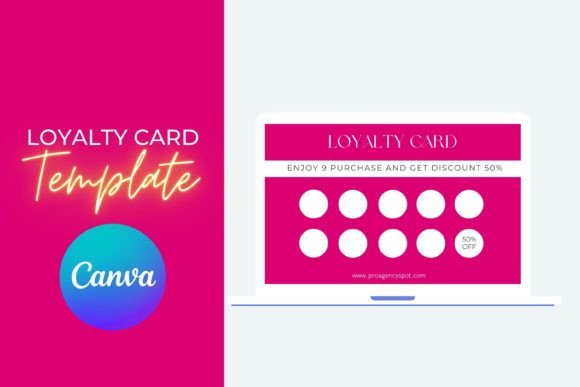
When evaluating a Loyalty Card Canva Template, it is essential to look beyond the surface aesthetics and analyze the visual hierarchy. A well-designed template balances whitespace with information density. It needs to accommodate your logo without overwhelming the functional elements like the stamp grid or the "rewards earned" section.
Consider the typography used in a premium template. You will often see a sophisticated font pairing strategy at play. For instance, a bold display font might be used for the headline—"Loyalty Rewards"—to grab attention instantly, while a highly legible sans serif font is used for the fine print and terms. This contrast creates a visual hierarchy that guides the eye naturally. If the template utilizes a script font or a handwritten font, it is usually to evoke a sense of warmth, intimacy, and personal connection, making the brand feel more approachable. However, as a designer or business owner, you must ensure that this stylistic choice aligns with your broader brand identity. A tech startup might prefer the clean lines of a modern typography set, whereas a bakery might lean toward the organic curves of a serif font.
The "personality" of the card is dictated by these choices. A minimalist card with sharp geometric shapes and a monochromatic color palette speaks to efficiency and modernity. Conversely, a card with rounded corners, pastel tones, and a creative font suggests friendliness and creativity. The visual appeal is not just decoration; it is a strategic signal to the customer about the nature of your business.
Practical Applications: From Digital Screens to Physical Wallets
One of the greatest strengths of using a Canva-based template is its versatility across different mediums. While the primary function of a loyalty card is print—usually on sturdy cardstock—the digital application is equally important in today's hybrid market.
Print and Packaging: The tactile experience matters. When printing your loyalty card, the template's design must withstand the transition from screen to paper. High-contrast designs work best here. This is where packaging design principles come into play. The card should feel like a premium accessory to your product. If you are a coffee shop owner, the card handed over the counter should feel as curated as the latte art on the cup.
Digital Integration: Don't limit your loyalty program to physical cards. The same design principles apply to social media graphics and web design. You can adapt the template to create digital loyalty badges for email signatures or "VIP Member" graphics for Instagram stories. This ensures consistency across your editorial design and digital presence, reinforcing the loyalty program through repetition and recognition.
Customizing for Consistency and Recognition
A template is a starting point, not the final product. The true value of the Loyalty Card Canva Template is realized when it is customized to fit seamlessly into your existing ecosystem. Canva allows for easy manipulation of colors, so you should ensure the hex codes match your brand palette exactly. Do not settle for "close enough." Color consistency is a pillar of professional logo design and brand management.
Furthermore, consider the specific rewards you are offering. The layout of the card should accommodate the complexity of your program. If you offer tiered rewards (e.g., 10% off after 5 visits, a free product after 10), ensure the template has enough space to communicate this clearly without shrinking the text to an unreadable size. Readability is paramount; a beautiful card that confuses the customer has failed its primary objective.
Strategic Implementation for Business Growth
Deploying a loyalty card is a strategic business decision, not just a design exercise. The card serves as a physical anchor for your customer retention strategy. It is a commercial font of value—literally a currency of goodwill.
When distributing these cards, train your staff to explain the benefits clearly. The card should do the heavy lifting visually, but the human interaction seals the deal. For businesses looking to scale, having a template that is easy to edit means you can create seasonal variations—holiday-themed loyalty cards or limited-time offer cards—without hiring a designer for every iteration. This agility is a massive asset for small business owners and marketers.
Ultimately, a well-executed loyalty program increases the Customer Lifetime Value (CLV). By providing a tangible reminder of the rewards to come, you keep your brand top-of-mind. Whether you are a crafter selling at local markets or a boutique agency managing multiple clients, the ability to produce professional, on-brand loyalty materials instantly elevates your operation.
Investing time in selecting the right Loyalty Card Canva Template