Counting Objects Math Worksheet: Building Essential Skills
When you're crafting an educational brand or developing resources for young learners, the tools you choose must do more than just look good—they have to work hard. A resource like the Counting Objects Math Worksheet is a perfect example of design meeting function. It isn't just a page filled with numbers; it's a carefully constructed environment designed to foster one-to-one correspondence and number recognition. For educators, parents, and content creators in the educational space, understanding the mechanics behind such a worksheet is crucial for developing high-quality learning materials.
Visual Appeal and Educational Psychology
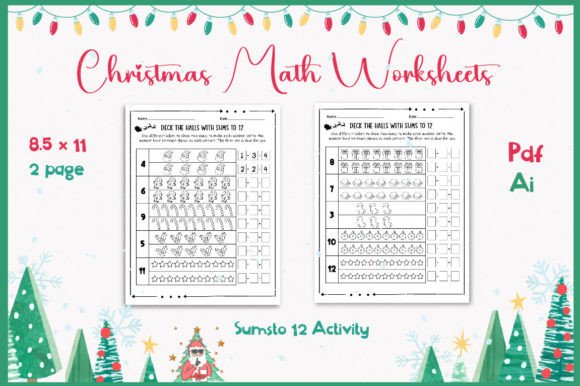
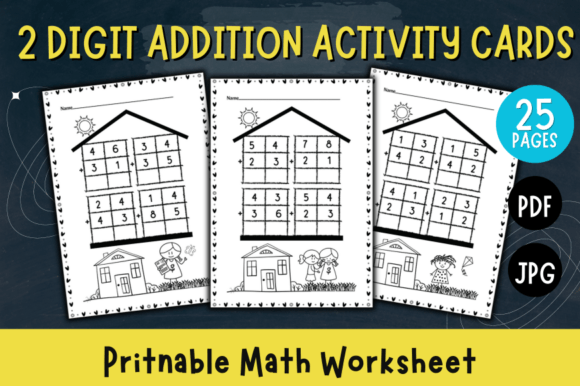
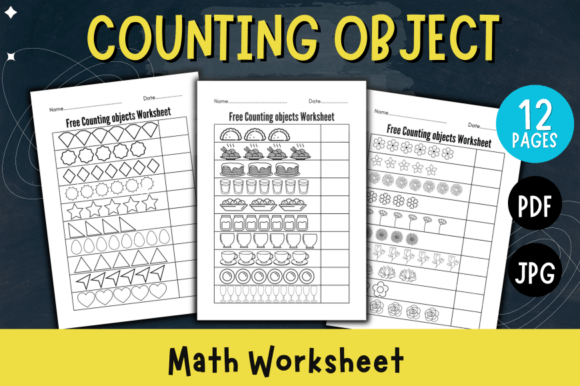
The strength of the Counting Objects Math Worksheet lies in its visual clarity. In early childhood education, cognitive load is a real concern. If a worksheet is cluttered with unnecessary design elements—complex backgrounds, overly ornate fonts, or muddy color palettes—it distracts from the learning objective. The ideal worksheet uses high-contrast visuals and clean lines. We are looking at "objects" here—whether they are animals, fruits, or geometric shapes—rendered in a way that is instantly recognizable to a preschooler.
As a designer or publisher, you need to appreciate the personality of these visuals. They should be friendly and engaging but not chaotic. The "style" of a counting worksheet should be minimalistic in its distractions but rich in its educational value. When a child looks at the Counting Objects Math Worksheet, their eyes should be drawn immediately to the items they need to count, not the borders or the background noise. This creates a sense of calm focus, which is essential for critical thinking and analysis.
Strategic Applications for Creators and Educators
If you are a small business owner selling educational printables, or a homeschooler curating a curriculum, the Counting Objects Math Worksheet serves as a foundational asset. But its application goes beyond the classroom table. For those in the digital design and content creation space, these worksheets represent a specific niche of design assets.
Consider how you present these resources on social media or within an e-commerce store. The "brand identity" of your educational materials relies on consistency. If you are bundling the Counting Objects Math Worksheet with other products, such as flashcards or coloring books, the visual language needs to speak the same dialect. This means paying attention to:
- Typography: While the worksheet focuses on numbers, any instructional text must use a highly legible sans serif font. Avoid script fonts or decorative handwritten fonts for the actual counting instructions, as these can be difficult for emerging readers to decipher.
- Color Theory: Use colors that are printer-friendly. High-saturation colors often look different on screen than they do on paper. A professional worksheet considers the CMYK color space to ensure the objects remain distinct when printed.
- Layout Hierarchy: There must be a clear visual hierarchy. The numbers and the answer boxes need to be prominent. A child shouldn't have to hunt for where to write the numeral.
Integrating Worksheets into a Broader Brand Identity
For entrepreneurs and marketers in the educational sector, a single Counting Objects Math Worksheet is a touchpoint for your brand identity. It’s not just a math exercise; it’s a representation of your quality standards. When a parent downloads a PDF or JPEG file from your store, they are judging the usability and the aesthetic.
Think about packaging design for a moment. Even though this is a digital product, the "packaging" is the thumbnail image and the preview PDF. If you are offering a set of 12 pages, you need to demonstrate that variety without losing cohesion. The Counting Objects Math Worksheet should feel part of a family of products.
Furthermore, consider the web design of your landing page. How is the worksheet displayed? Is it embedded in a way that allows users to see the detail? Using a premium font for your website headers can elevate the perceived value of the free or paid worksheet you are offering. The contrast between a sophisticated display font on your website and the clean, simple text on the worksheet creates a professional ecosystem.
Practical Guidance for Selection and Pairing
If you are a designer creating these worksheets from scratch, or a buyer evaluating them, here is some practical guidance on "font pairing" and asset management. While the worksheet itself uses simple numerals, the surrounding instructional text requires a complementary typeface.
- Evaluate Readability: The primary goal of the Counting Objects Math Worksheet is counting, not reading. However, instructions like "Count the apples" or "Write the number" are necessary. Use a modern typography style—a clean sans serif—that mimics the letterforms children are learning to write. Avoid serif fonts with complex terminals, as these can confuse young learners.
- Testing Pairings: If you are creating a cover page for your worksheet bundle, you might pair a bold display font for the title with a standard sans serif for the subtitle. This creates a hierarchy that guides the parent's eye (the buyer) while keeping the child's interface (the worksheet) clean.
- Licensing and Usage: Always verify the terms of use. As noted in standard licensing agreements, assets like these are usually for personal use unless a commercial license is purchased. If you are a teacher creating materials for your classroom, personal use is often sufficient. However, if you are a content creator bundling these into a product for sale, you must ensure you have the rights to distribute the design assets.
The Psychology of Color and Shape in Counting
Returning to the worksheet itself, let's analyze the "visual characteristics" that make it effective. The objects used in a Counting Objects Math Worksheet are rarely random. They are chosen for their universality and recognition value.
- Fruits and Animals: These are concrete nouns. A child knows what an apple is before they know what the number "3" represents. By anchoring the abstract concept of quantity to a concrete object, the worksheet facilitates learning.
- Geometric Shapes: These bridge the gap between concrete and abstract. Counting circles or squares prepares children for more advanced math concepts.
From a design perspective, the "personality" of the worksheet should be encouraging. If the visual style is too rigid or sterile, it can feel like a test rather than an exploration. A successful Counting Objects Math Worksheet uses soft edges and relatable imagery to lower anxiety. This is a subtle form of brand perception—you are positioning your educational materials as helpful and kind, not just authoritative.
Conclusion: The Value of Structured Play
Ultimately, a Counting Objects Math Worksheet is more than a busy activity. It is a tool for developing critical thinking. When a child analyzes a visual representation of quantity and translates it into a numeral, they are performing a complex cognitive task. They are filtering visual noise, identifying relevant data, and applying a symbolic system to that data.
For the creative professional, educator, or parent, recognizing the craftsmanship behind these simple pages is key. Whether you are designing them using modern typography tools or selecting them for a curriculum, focus on clarity, consistency, and the user experience. A well-designed worksheet respects the child's intelligence and supports their journey into the world of numbers. By prioritizing readability and visual hierarchy, you ensure that the learning process remains the star of the show.