Charming Teddy Bear Coloring Pages for Creative Projects
There’s a specific kind of warmth that a well-drawn teddy bear brings to a project. It’s nostalgic, friendly, and immediately puts an audience at ease. When working with Cute Cartoon Teddy Bear Coloring Pages, you are dealing with more than just outlines; you are handling a versatile design asset that bridges the gap between childhood nostalgia and modern, clean illustration styles. For designers, content creators, and small business owners, these illustrations offer a unique opportunity to inject personality into branding without relying on stock photography that feels impersonal.
Visual Style and Personality
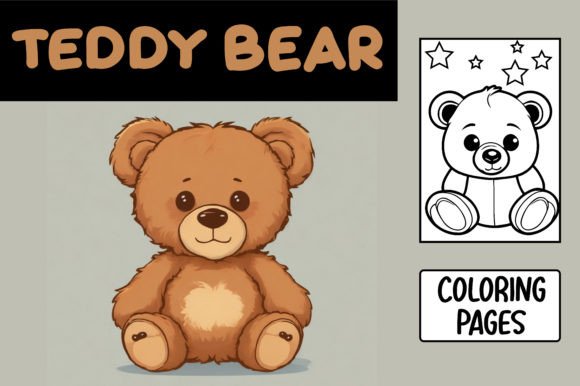
The primary strength of these illustrations lies in their visual character. Unlike realistic drawings, cartoon teddy bears rely on exaggeration and simplification to convey emotion. The lines are typically bold and clean, ensuring that the features remain distinct even when viewed at smaller sizes or from a distance. This style is rooted in modern typography principles—clarity and legibility—applied to illustration. The bears often feature rounded silhouettes, large expressive eyes, and soft, non-threatening poses. This creates a "personality" that is inherently trustworthy and engaging.
From a design perspective, the aesthetic leans heavily into a handwritten or script feeling, even when the lines are geometric. It avoids the cold rigidity of a standard sans serif font while maintaining the approachability of a friendly display font. If you were to translate this visual weight into typography, you would be looking for a premium font that has rounded terminals and a soft baseline—something that feels like a warm hug on paper. The visual consistency across different poses ensures that you can use multiple bears in a single layout without the design feeling chaotic or disjointed.
Strategic Applications for Brands and Creators
For the entrepreneur or marketer, the utility of Cute Cartoon Teddy Bear Coloring Pages extends far beyond simple coloring books. These assets are incredibly effective in brand identity work, particularly for brands targeting family-oriented demographics, education, mental wellness, or comfort products.
Consider the following practical applications:
- Packaging Design: A tea company or a bakery can use these illustrations to create a cozy, artisanal feel. The outline style works exceptionally well for spot UV printing or embossing on cardboard packaging.
- Editorial Design: Bloggers and publishers can use these bears as mascots or section breakers. In a long-form article, a small illustration can reset the reader's eye, much like a drop cap or a pull quote.
- Social Media Graphics: The bold lines and simple shapes make these perfect for Instagram Stories or Pinterest pins. They stand out against busy backgrounds and are easily recognizable as thumbnails.
- Merchandise: Because the files are provided in high-resolution formats (PDF and JPEG), they are print-ready for t-shirts, tote bags, and stickers. The vector-like quality of the PDF ensures that scaling up for large prints does not result in pixelation.
Pairing and Layout Strategy
One of the most common mistakes in design is treating illustrations and typography as separate entities. To create a cohesive visual hierarchy, you must treat these coloring pages as part of your typographic system. When selecting typefaces to accompany the bears, avoid overly complex serif fonts or rigid sans serif fonts that might clash with the organic, rounded nature of the illustrations.
Instead, look for a font pairing that complements the playful nature of the art:
- The Header: Use a bold, rounded display font. This mimics the weight of the bear's outlines and creates a unified look for headlines and titles.
- The Body Copy: Pair it with a highly legible, humanist sans serif font. You want something that is professional enough for business communication but retains a friendly x-height to match the illustration's vibe.
- The Accent: If you need a "handmade" touch for callouts or quotes, a script font with a natural flow works well, provided it isn't too ornate.
When integrating these assets into your web design, remember that coloring pages are inherently interactive. You can use them in digital marketing as "click to color" interactive elements or as downloadable lead magnets to grow your email list. This adds value for your audience and increases engagement time on your site.
Evaluating Quality and Usability
As a professional, you know that the quality of design assets dictates the quality of the final product. When evaluating these specific coloring pages, pay attention to the line weight and node points. High-quality vector outlines will have smooth curves without unnecessary anchor points, making them easy to edit if you need to adjust the shape or color a specific section in software like Adobe Illustrator.
The fact that these assets are delivered in both PDF and JPEG formats offers significant flexibility. The JPEGs are perfect for quick mockups, social media posts, or printing on home printers. The PDFs are essential for professional print production, ensuring that the lines remain crisp and sharp regardless of the output size. This dual-format delivery is a hallmark of a premium font or asset package—it respects the workflow of the end-user.
Finally, always consider the licensing and usage rights. For commercial use, ensuring that you have the right to modify and distribute the work is crucial. These specific pages are designed for creative freedom, allowing you to integrate them into your logo design concepts, product packaging, or digital content without the fear of generic repetition. By using high-quality, specific illustrations like Cute Cartoon Teddy Bear Coloring Pages, you move your project away from generic stock imagery and toward a bespoke, curated aesthetic that resonates with your specific audience.